The country has eleven official languages, three capital cities (Pretoria is the administrative, Cape Town is the legislative, and Bloemfontein is the judicial — South Africa has never done anything the simple way), and a population of around 62 million people. The dominant languages you'll encounter as a traveller are English (spoken everywhere, by everyone, in all contexts), Afrikaans (especially in the Western Cape and Karoo), Zulu (in KwaZulu-Natal), and Xhosa (in the Eastern Cape and townships around Cape Town). You do not need to speak any language other than English to travel here comfortably, but learning a few words in isiZulu or isiXhosa - "sawubona" (hello), "ngiyabonga" (thank you) - will make people light up in a way that is genuinely lovely.
The climate is broadly excellent. The Western Cape (Cape Town, the Winelands, the Garden Route) has a Mediterranean climate: warm dry summers from November to March, cooler and wetter winters from June to August. The rest of the country - KwaZulu-Natal, Mpumalanga, Limpopo, the Drakensberg — has summer rainfall, which means warm and sometimes thundery November to March, and cool dry winters from May to August. The Kruger National Park is best visited in the dry winter months (May to September) when the bush thins out and animals congregate around water sources. The Wild Coast is warm year-round but can be very wet in summer. The bottom line: there is no bad time to visit South Africa. There are better times for specific regions, but the country is worth visiting in any month of the year.
The currency is the South African Rand (ZAR), and it has been weak against the euro, pound, and dollar for many years. In 2026, you should budget on roughly R20–R21 to the euro, though exchange rates move — check the current rate before you travel. The practical effect of this is that South Africa is, for European and American travellers, extremely affordable. Not "cheap backpacker hostel in Southeast Asia" cheap — the infrastructure here is good, the standards are high, and you pay a reasonable amount for them. But compared to travelling at home, it is a revelation.
FOR IN-DEPTH INFO, SEE:
BACKPACKING REGIONS
Frequently Asked Questions
How much does a dorm bed cost?
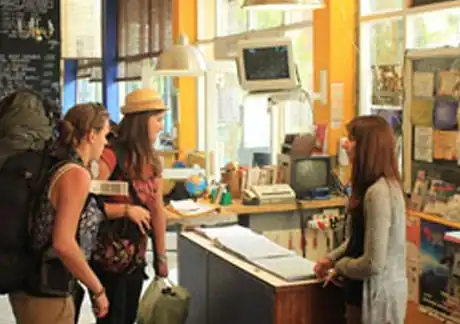
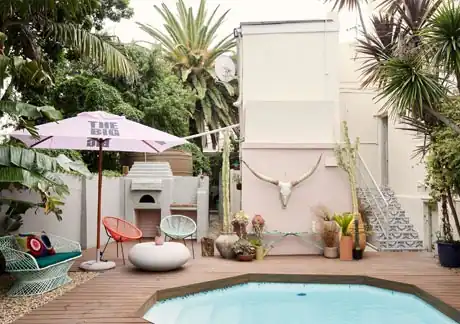
At a good South African backpacker hostel, a dorm bed in 2026 will cost you somewhere between €8 and €18 per night, depending on location, season, and the standard of the hostel. Cape Town is at the higher end of that range — a bed in one of the city's better hostels typically runs €12–€18. Smaller towns and rural hostels are at the lower end: €8–€12 is typical in places like Wilderness, Chintsa, or Sodwana Bay. The Baz Bus corridor (the main backpacker trail from Cape Town to Johannesburg via the coast) has the most competition, which tends to keep prices honest.
What does a private room cost?
A private double room at a backpacker hostel - which is usually a simple, clean room with a double or twin bed, often with shared bathroom - runs from around €25 to €60 per night depending on location and facilities. In Cape Town, expect to pay €35–€60 for a decent private room in a well-located hostel. If you're travelling as a couple and splitting the cost, this is extraordinarily good value. Some hostels also offer en-suite private rooms, which sit at the top of that price range.
How do I get around? What are the transport options?
This is the single most important logistical decision you'll make, and it's worth thinking through before you arrive.
The Baz Bus is the famous hop-on, hop-off backpacker bus that has been running the coastal trail for over 25 years. It once covered the whole country, but since Covid its operations have been limited to the coastal stretch between Cape Town and Gqeberha (Port Elizabeth on older maps) - the Garden Route and half the Sunshine Coast - stopping directly at hostels along the way. It is the safest and most social way to travel the route. You pay once for a pass covering the stretch, and you can get on and off as many times as you like in both directions. It is expensive (it costs almost as much as hiring a car), and it does not run every day (and so requires some planning), but what you're paying for is safety and sociability: door-to-door hostel transfers, the near-certainty that nothing will go wrong en route, and a bus full of fellow backpackers who are all at exactly the same stage of their trip as you are. For solo travellers on their first visit, it is excellent.
Mainline / intercity buses (Intercape, Greyhound, Intercity Express) are significantly cheaper than the Baz Bus - a Cape Town to Johannesburg ticket can be as little as €20–€35 — but they run between city bus terminals, not hostel doors, and they are considerably less social. They are a good option if you are making long direct runs between cities and know exactly where you are going. See the advice section of this website for a full directory of bus companies
Car hire is the option that unlocks South Africa properly. If you are travelling as a pair or a small group, the maths is compelling: the cost of a small hire car (a Toyota Yaris-class vehicle) works out at roughly €20–€35 per day all-in with basic insurance, and split between two or three people, this is often cheaper per person than the Baz Bus while giving you total freedom to stop where you want, when you want. South Africa drives on the left, the roads are good (with some notable exceptions on rural routes and after heavy rain), and getting a car means you can reach places the Baz Bus does not go: the Cederberg, Route 62, the Karoo, the Drakensberg, Sani Pass, the Panorama Route, Hluhluwe-iMfolozi, Addo. There is one firm rule with car hire in South Africa: do not drive at night outside of cities and well-lit suburban roads. The combination of unlit pedestrians and cyclists, cattle on roads in rural areas, and potholes that can appear without warning makes night driving genuinely dangerous. Not to mention that drunk driving is a national sport, and if you're on the roads at night, half of the other drivers are likely to be under the influence. Plan your days to arrive before dark.
What does food and drink cost?
This is where South Africa really makes you feel like royalty. A big, satisfying meal at a good sit-down restaurant — a proper main course with a drink - will cost you €8–€15. Street food, market food, and takeaway options (a gatsby from a Cape Flats takeaway, a bunny chow in Durban, a boerewors roll from a roadside vendor) cost €2–€5 and are frequently extraordinary. Supermarket food is cheap and good: you can eat very well self-catering, and most hostels have communal kitchens. A braai (a South African barbecue) from the supermarket - a pack of boerewors sausage, some rolls, and a six-pack of local beer - will feed two people adequately for around €10 total and is, frankly, one of the most enjoyable dining experiences the country offers. A local beer (Windhoek, Castle, Black Label) in a bar costs €1.50–€2.50. A decent glass of locally-produced wine costs €2.50–€4. A coffee is €1.50–€3. South Africa has an outstanding wine and craft beer culture, and it costs almost nothing to participate in it.
What do day tours and activities cost?
Activities are where you'll spend the biggest chunks of money, and it's worth budgeting for them because they are the heart of the South African experience. Rough price guide for popular activities in 2026:
Bungee jumping at Bloukrans (world's highest commercial bridge jump, Garden Route) - approximately €90
Shark cage diving at Gansbaai (great white sharks, day trip from Cape Town) - approximately €120–€140
Tandem paragliding from Signal Hill, Cape Town - approximately €85
Cape Peninsula cycle-and-shuttle tour - approximately €45–€60
Abseiling Table Mountain - approximately €65
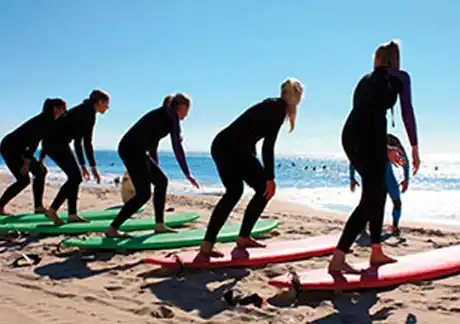
Surfing lesson with board hire, Muizenberg - approximately €25
White-water rafting, Storms River (Garden Route) - approximately €40–€55
Zip-lining, Tsitsikamma (Garden Route) - approximately €45–€60
Skydiving at Langebaan (West Coast) - approximately €160–€180
Soweto township tour, Johannesburg (full day) - approximately €30–€45
Self-drive day in Kruger National Park (gate fees) - approximately €25 per person
Guided Kruger sunset game drive - approximately €35–€50
Hluhluwe-iMfolozi full-day guided safari - approximately €60–€80
Sani Pass 4x4 tour into Lesotho - approximately €55–€70
Whale watching at Hermanus (seasonal, Aug–Nov) - approximately €35–€50
Table Mountain cable car (return) - approximately €13–€16
What is a realistic total daily budget?
Planning your daily spend depends heavily on your travel style, but here are three honest benchmarks:
Budget traveller (shoestring): €35–€50 per day. This covers a dorm bed (€10–€15), self-catered or market meals (€8–€12 for food), a couple of local beers (€4–€6), a Baz Bus or shared transport allocation, and perhaps one free or low-cost activity. You will eat well, sleep fine, and have a brilliant time. This is very achievable.
Mid-range backpacker: €55–€80 per day. Dorm or private room (€15–€35), mix of restaurant and self-catered meals, a paid activity every second or third day, local transport, drinks. This is the sweet spot for most travellers who want to do most of the major activities without feeling anxious about money.
Comfortable flashpacker: €80–€120+ per day. Private rooms at better-quality hostels or small guesthouses, restaurant meals, one or two activities per week, car hire contribution. You will not feel like you're roughing it at all.
One note on activities: even on a shoestring budget, prioritise a few of the big ones. The bungee, the cage dive, the Kruger game drive, the township tour — these are the experiences you will not replicate at home, and the memories will outlast any amount of money saved by skipping them.
Safety in South Africa
Let's talk about this directly, because it's the thing everyone asks about before they leave home, and it's the thing that most people, once they've been here, realise they had in slightly the wrong perspective.
South Africa has a serious crime problem, and it would be patronising to pretend otherwise. Violent crime — robbery, carjacking, assault - happens. The murder rate is among the highest in the world. This is a real thing and it demands real respect. Equally, hundreds of thousands of backpackers travel South Africa every year without incident, and the overwhelming majority return home with a full wallet, all their teeth, and a desire to come back as soon as possible. The difference between them and the small minority who have a bad experience comes down almost entirely to behaviour and awareness.
The practical rules are simple and, once you get into the habit of them, entirely unstressful:
Use Uber (not taxis) for all urban travel after dark. In Cape Town, Johannesburg, Durban, and all major cities, Uber is cheap, widely available, and safe. A standard Uber across Cape Town costs €2–€5. A regular street taxi involves negotiation, no route tracking, and occasional bad outcomes. Use Uber. Always.
Do not walk in unfamiliar urban areas after dark. This applies to the Cape Town CBD outside of known safe zones, to Johannesburg city centre at any time, and to any city neighbourhood that your hostel staff has not specifically told you is safe for walking. Your hostel manager knows which streets are walkable on a given evening. Ask them, listen to them, and follow their advice.
Keep your phone in your pocket on city streets. Devices are snatched from hands with remarkable speed and efficiency. Keep your phone out of sight unless you are seated inside an establishment. This takes about two days to become second nature.
Do not drive at night on rural roads. This has been covered under transport above, but it bears repeating. Unlit pedestrians, livestock on the road, and sudden potholes make rural night driving in South Africa hazardous in a way that has no equivalent in Western Europe. Plan your driving days to arrive before dark.
Store your passport and valuables in your hostel's safe. All reputable hostels have in-room safes or a secure front-desk facility. Use them. Travel with a photocopy of your passport for daily use.
Trust your instincts. If a street feels wrong, turn around. If a person makes you uncomfortable, move away. The instinct that says "this is not right" is almost always correct, and acting on it is not rudeness - it is survival sense that applies everywhere in the world, not just here.
Get the right travel insurance. This is non-negotiable for South Africa. Make sure your policy covers medical evacuation (hospitals in rural areas vary enormously in quality), theft (document the serial numbers of your electronics before you leave), and adventure activities if you're planning on bungee jumps or shark cage dives - many standard policies exclude these.
The bottom line on safety: South Africa rewards the informed, attentive traveller handsomely. It punishes the distracted and careless more severely than destinations where the base-level risk is lower. Read the briefings your hostel gives you on arrival. They are not bureaucratic box-ticking — they are genuine, updated, locally-specific advice from people who want you to have a good time and come back in one piece.
FOR IN-DEPTH SAFETY ADVICE, SEE:
ADVICE